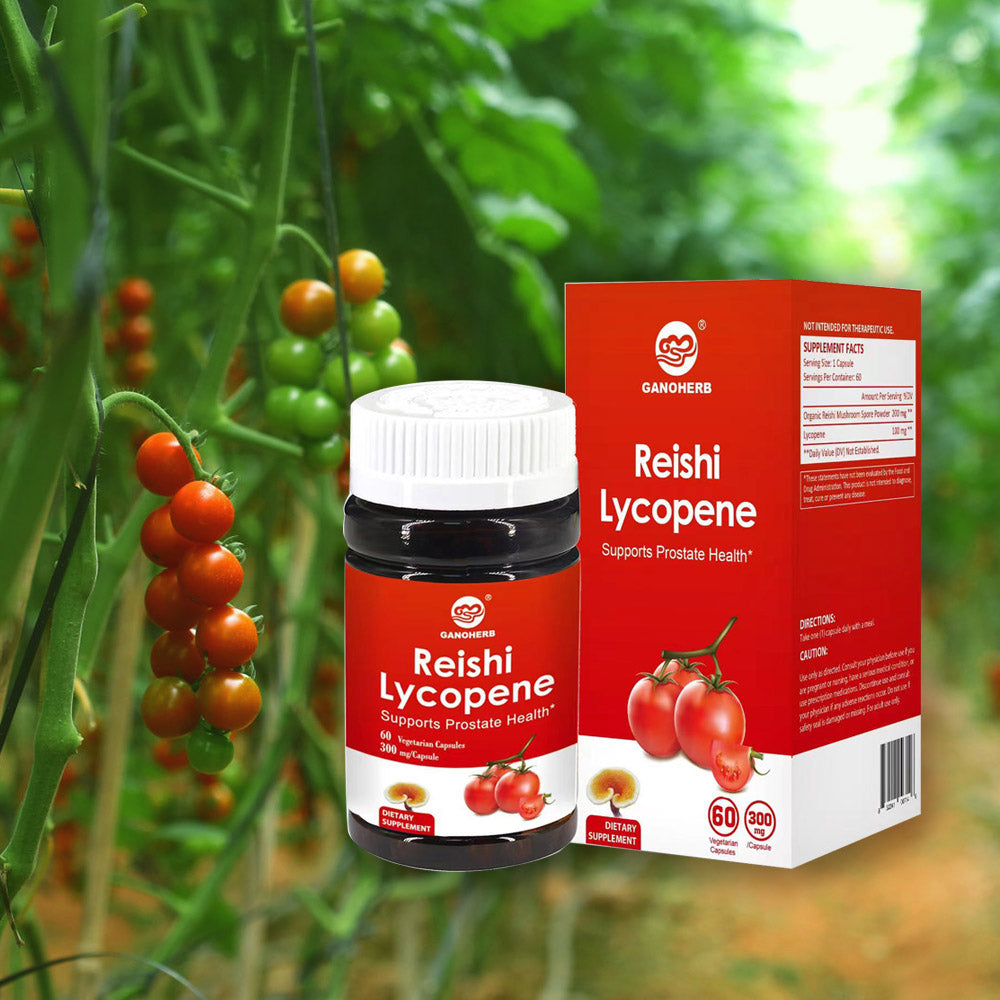


Lycopene Antioxidants Capsules: Formulations, Reishi Synergy, and Buying Standards
Dietary supplement innovation increasingly focuses on lipid-soluble phytochemicals paired with functional fungal extracts. Among targeted protective compounds, lycopene antioxidants capsules have secured a primary position across preventive wellness lines. By capturing standardized carotenoids from non-GMO tomato oleoresins and marrying them with concentrated red Reishi (Ganoderma lucidum) extracts, modern formulations deliver antioxidant support without unnecessary excipients.
Understanding the procurement specifications, active constituent verification, and production parameters behind these capsules is vital for commercial buyers, private-label brand developers, and informed consumers. This analysis reviews the processing methods, stability considerations, market value drivers, and selection standards required to evaluate premium botanical antioxidant finished products.

Core Comparative Analysis: Lycopene Antioxidants Capsules vs. Single-Compound Formulations
The marketplace offers diverse delivery systems for carotenoid supplementation, ranging from isolated synthetic beadlets to whole-plant lipid matrices. Understanding the distinction between single-ingredient formats and multi-compound botanical architectures explains the expanding preference for comprehensive formulations.
- Synthetic Isolate Tablets: Conventional tableted products frequently rely on synthetic all-trans lycopene crystallized via chemical synthesis. While cost-efficient, synthetic crystals exhibit poor dispersibility in aqueous environments and call for significant digestive surfactants to achieve intestinal uptake. Furthermore, compression tableting subjects sensitive conjugated double bonds to mechanical shear and heat, increasing degradation risk.
- Natural Tomato Oleoresin Softgels: Premium products source lycopene from supercritical extracts of vine-ripened tomatoes (Solanum lycopersicum). This matrix contains natural companion compounds—including phytoene, phytofluene, tocopherols, and beta-carotene—which collectively shield the primary carotenoid from premature photo-oxidation.
- Synergistic Reishi and Lycopene Antioxidants Capsules: Advanced formulations combine oil-dispersed natural tomato oleoresin with micronized or extract-bound red Reishi mushroom constituents. Reishi brings water-soluble beta-1,3/1,6-glucans and lipid-compatible oxygenated triterpenoids (ganoderic and lucidenic acids). This multi-phase system targets both lipid-soluble and water-soluble biological compartments, presenting an integrated dynamic that isolated single-compound options cannot duplicate.
Standardizing multiple botanicals within a single capsule demands precise carrier selection to avoid phase separation. Medium-chain triglycerides (MCT) or cold-pressed virgin seed oils function as stable hydrophobic delivery vehicles, keeping both carotenoids and triterpenes bioaccessible across extended shelf periods.
Advanced Extraction Processes and Encapsulation Integrity
The manufacturing journey of high-grade lycopene antioxidants capsules involves distinct isolation and stabilization steps to safeguard vulnerable polyunsaturated chains from isomerization.
Supercritical Carbon Dioxide (scCO2) Extraction
Modern clean-label production avoids petrochemical residues such as hexane or acetone. Supercritical CO2 extraction operates at controlled temperatures (between 35°C and 45°C) and moderate pressures (typically 300 to 450 bar). Under these parameters, carbon dioxide acts as a non-destructive solvent that extracts concentrated lycopene crystals alongside natural seed lipids. Because CO2 reverts to ambient gas upon depressurization, the resulting extract is pure, solvent-free, and stable against light exposure.
Functional Mushroom Processing: Water and Ethanol Fractionation
Red Reishi requires targeted processing to yield bioactive fractions. Hot-water decoction captures standard beta-glucan polysaccharide fractions, whereas warm ethanolic extraction separates the hydrophobic triterpenoid acids. When blending these mushroom extracts into oily carotenoid suspensions, manufacturers apply dry-spray encapsulation or micro-fluidized dispersion to embed microscopic fungal fractions into an oil-continuous phase without causing sedimentation or moisture-driven capsule softening.
Encapsulation Matrix: Gelatin vs. Vegetarian Softgel Shells
The delivery capsule itself plays a central role in protecting active ingredients against oxygen ingress:
- Bovine or Porcine Gelatin Shells: Historically the benchmark for oil-based fills due to exceptional oxygen-barrier properties. However, gelatin shells are vulnerable to cross-linking when exposed to reactive aldehydes, potentially impeding dissolution.
- Modified Tapioca and Carrageenan Shells: Modern vegetarian softgel polymers provide comparable oxygen-barrier performance and withstand higher thermal thresholds during shipment. They eliminate cross-linking concerns, support uniform disintegration within 15 minutes, and accommodate diverse consumer preferences.
Selection Criteria for High-Grade Botanical Formulations
Evaluating lycopene antioxidants capsules requires a disciplined review of analytical certificates and manufacturing credentials rather than superficial promotional statements. Commercial buyers and distributors should focus on four essential evaluation parameters.
1. Verified Active Compound Assays
Products must state quantified active components verified via High-Performance Liquid Chromatography (HPLC). A superior capsule profile typically presents:
- Standardized Natural Lycopene: 10 mg to 15 mg per serving, confirming predominantly the cis- and trans-isomer distribution characteristic of natural fruit extracts.
- Standardized Reishi Mushroom Extract: Standardized to at least 30% Polysaccharides (with verified beta-D-glucan content above 20%) and 2% to 4% total Triterpenes (ganoderic acids).
- Natural D-Alpha Tocopherol: Integrated at low inclusion rates (2 to 5 IU) strictly to protect the active lipid phase against autoxidation throughout the stated shelf life.
2. Low Oxidation Indicators
Carotenoids degrade into fragmented apo-lycopenals when exposed to excessive heat, oxygen, or light during processing. Suppliers must provide Certificate of Analysis (CoA) documentation detailing peroxide value (PV), p-anisidine value (p-AV), and total oxidation (TOTOX). A high-integrity oil fill should sustain a Peroxide Value below 5 meq/kg and a TOTOX score under 10 at the time of release.
3. Heavy Metal and Microbiological Purity Thresholds
Mushroom fruiting bodies accumulate elements from their cultivation substrates, making rigorous testing non-negotiable. Finished capsule batches must adhere to stringent purity limits:
- Lead (Pb): < 0.5 ppm
- Arsenic (As, inorganic): < 1.0 ppm
- Cadmium (Cd): < 0.2 ppm
- Mercury (Hg): < 0.1 ppm
- Absence of pathogenic microbes including Salmonella, Escherichia coli, and Staphylococcus aureus.
4. Dissolution and Disintegration Verification
Even potent formulations fail to support personal health goals if the capsule shell does not rupture appropriately in digestive fluids. In-vitro disintegration times should not exceed 30 minutes in simulated gastric fluid (without enzymes) at 37°C, as validated via USP <2040> testing guidelines.
Commercial Procurement, Cost Drivers, and Supply Chain Evaluation
Procuring bulk batches or establishing private-label contracts for lycopene antioxidants capsules requires understanding the cost components that distinguish budget commodities from premium products.
Raw Material Valuation Factors
Natural tomato oleoresin extracted via supercritical carbon dioxide commands a price premium of 30% to 50% over solvent-extracted or synthetic alternatives. The agricultural provenance of the tomatoes—predominantly non-GMO crops from regions with strict pesticide residue boundaries—directly impacts the baseline active ingredient pricing.
Similarly, Red Reishi extracts derived purely from wood-log (Duanwood) cultivated fruiting bodies cost considerably more than mycelium cultivated on sterile grain substrates. Grain-grown Reishi frequently contains elevated levels of residual starch (alpha-glucans) rather than bioactive fungal beta-glucans and triterpenes. Authentic fruiting body extracts provide distinct triterpenoid arrays that preserve formula integrity.
Manufacturing Overhead and Packaging Integrity
Finished softgel production demands precision climate controls. Lycopene is photosensitive and heat-reactive, necessitating nitrogen-purged mixing vessels and amber or opaque encapsulation lines. Packaging choices further influence the final unit cost:
- Blister Packaging (Alu-Alu or PVC/PVDC): Provides individual unit protection against ambient humidity and air exchange, extending stability in humid export markets. Adds roughly 15% to 25% to secondary packaging expenses.
- High-Density Polyethylene (HDPE) or Dark Glass Bottles: Economical for bulk markets. Must include an induction seal, an active desiccant canister, and a nitrogen purge at capping to minimize headspace oxygen.
Supplier Verification Checklist for Commercial Buyers
Before issuing purchase orders for retail or institutional supply lines, brands should verify that the manufacturer satisfies key operational baselines:
- Independent third-party Good Manufacturing Practice (GMP) registration.
- Full traceability from agricultural farm/greenhouse through extraction and encapsulation.
- Validation of real-time and accelerated stability studies (25°C/60% RH and 40°C/75% RH for 24 months).
- Access to complete HPLC chromatograms rather than generic non-specific UV-Vis testing for lycopene content.

Strategic Application and Regimen Coordination
The systematic inclusion of lycopene antioxidants capsules into daily nutritional regimens relies heavily on basic biological absorption mechanisms. Carotenoids are strongly lipophilic molecules that depend on dietary micelles for transport through the intestinal mucosa into the lymphatic system.
Timing and Dietary Synergy
Consumers achieve optimal compound uptake when taking capsules alongside a meal containing healthy dietary fats. Including foods such as extra virgin olive oil, avocado, or nuts stimulates biliary secretion and pancreatic lipase activity. The resulting mixed micelles incorporate the solubilized lycopene and mushroom triterpenes, significantly facilitating transport across enterocyte borders.
Complementary Daily Regimens
Integrating these capsules into a broader wellness protocol works well alongside balanced micronutrient intake:
- Morning Protocol: Pair one capsule with breakfast containing healthy fats to a part of a daily antioxidant routine throughout daytime oxidative challenges.
- Botanical Pairing: Works smoothly alongside water-soluble botanical extracts like green tea polyphenols or standardized pomegranate extracts to form a dynamic support against ambient reactive oxygen species.
- Consistent Habit: Consistent daily consumption over a sustained period of 8 to 12 weeks provides continuous steady-state concentrations in steady-state concentrations in the body over time.
Frequently Asked Questions
Q1: Why are lycopene antioxidants capsules formulated with lipid carriers rather than dry powders?
A1: Lycopene is naturally fat-soluble with low crystalline bioavailability in dry formats. Suspending the extract in healthy oils like extra virgin olive oil or MCT forms micro-dispersions that blend easily into digestive micelles. This configuration supports smooth intestinal absorption compared to non-solubilized dry powders.
Q2: What role does red Reishi extract play when paired with lycopene?
A2: Red Reishi introduces distinct bioactives—specifically fungal beta-glucans and oxygenated triterpenoids—that operate through different, supportive biological paths than carotenoids. This combination provides dual-action balance across both hydrophilic and lipophilic environments, supporting overall wellness.
Q3: How can buyers distinguish natural lycopene from synthetic variants on a label?
A3: Natural lycopene is typically identified as derived from tomato fruit extract (Solanum lycopersicum) or non-GMO tomato oleoresin, frequently naming the natural presence of related carotenoids like phytoene and phytofluene. Synthetic lycopene is generally labeled simply as Lycopene or Synthetic Lycopene without accompanying botanical source information.
Q4: Do lycopene antioxidants capsules require refrigeration?
A4: Refrigeration is generally not required if the capsules are produced under nitrogen displacement and packaged in light-blocking containers. Storing the product in a cool, dry place away from direct sunlight (ideally between 15°C and 25°C) is sufficient to maintain compound stability and shell integrity through the expiration date.
Q5: Can these capsules be integrated safely alongside multivitamin regimens?
A5: Yes. Standard lycopene doses (10 mg to 15 mg) complement typical daily multivitamin formulas without competitive absorption issues. Because multivitamins rarely contain functional quantities of specialized carotenoids or mushroom fractions, this pairing delivers focused botanical support without exceeding safe dietary thresholds.
Q6: What is the significance of the cis versus trans isomer ratio in lycopene products?
A6: In fresh tomatoes, lycopene exists primarily as the linear all-trans isomer. However, gentle thermal exposure during extraction converts a portion into bent cis-isomers. Laboratory research suggests that cis-isomers possess higher solubility in bile acid micelles and incorporate smoothly into human plasma and tissue matrices.
Conclusion: The Future of Dual-Phase Carotenoid Formulations
The evolution of dietary supplements emphasizes sophisticated, evidence-backed ingredient combinations over single-molecule isolates. High-potency lycopene antioxidants capsules that incorporate standardized red Reishi mushroom fractions reflect this modern formulation approach. By pairing lipid-soluble carotenoids with targeted fungal triterpenes and beta-glucans, these advanced supplements support overall wellness as part of a healthy lifestyle.
For brands and consumers alike, evaluating products based on clean scCO2 extraction, verified HPLC active assays, low oxidation parameters, and protective encapsulation ensures both safety and measurable value. Choosing thoughtfully formulated botanical supplements establishes a solid foundation for proactive, long-term personal vitality.