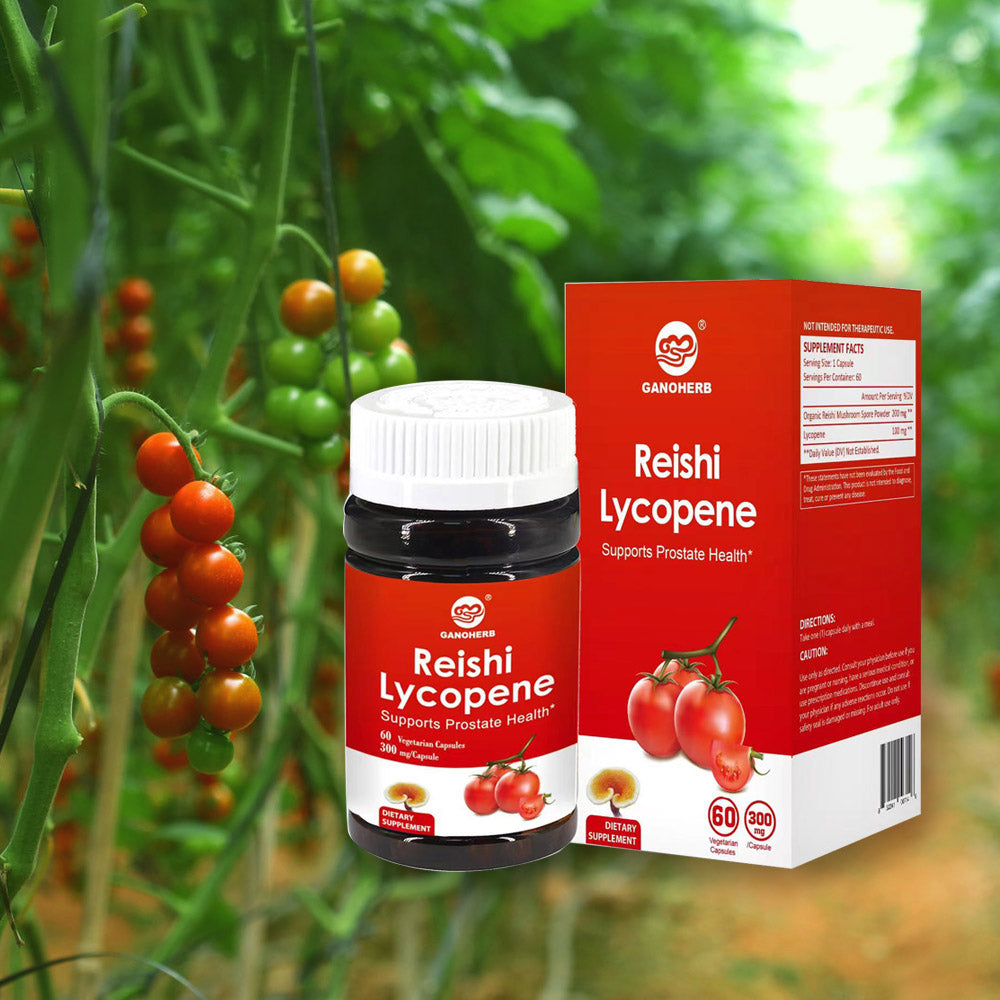


Lycopene 50mg 200 Capsules: Technical Formulation, Stability, and Quality Specifications
In the specialized field of carotenoid supplementation, the product configuration of lycopene 50mg 200 capsules represents a particular challenge and opportunity for manufacturers and private-label distributors. The 50mg per capsule dosage is considered a high-strength format, requiring precise formulation to maintain chemical stability and ensure consistent delivery over the 200-count bottle's lifespan. This article provides a technical examination of the critical parameters involved in developing, scaling, and quality-assuring such a product, focusing on raw material selection, encapsulation technologies, and analytical verification methods relevant to B2B stakeholders.

1. Chemical and Physical Characterization of Lycopene at 50mg Dosage
Lycopene (C₄₀H₅₆, molecular weight 536.87 g/mol) is a highly lipophilic acyclic carotenoid. In a 50mg fill intended for encapsulation, the active ingredient must be dispersed or dissolved in a suitable vehicle. Key considerations include:
- Crystalline form: Pure all-trans lycopene has a high melting point (172–175°C) and poor solubility in most food-grade oils (typically <0.2% w/w at 25°C).
- Isomerization tendency: Exposure to heat, light, or acidic conditions promotes conversion to cis isomers, altering both color and bioavailability.
- Oxidation kinetics: The extended conjugated polyene system is highly susceptible to radical attack, necessitating robust antioxidant protection.
For a 50mg dosage to be technologically feasible, the lycopene is usually incorporated as a pre-dispersed oleoresin (tomato extract) or as a micronized suspension in a stabilized oil blend. The choice directly impacts the manufacturing process of lycopene 50mg 200 capsules.
2. Formulation Approaches for High-Strength Lycopene Capsules
Developing a stable 50mg lycopene fill requires overcoming solubility and oxidative barriers. Two primary technological routes are employed:
2.1 Oil-Based Suspensions
Micronized lycopene crystals (D₉₀ <10 µm) are suspended in a mixture of medium-chain triglycerides (MCT) and a long-chain oil such as high-oleic sunflower oil. The suspension is stabilized with:
- Dispersing agents (e.g., lecithin or polyglycerol polyricinoleate) to prevent agglomeration.
- Antioxidant systems: typically 0.1–0.5% mixed tocopherols, 0.05% ascorbyl palmitate, and optional rosemary extract.
- Thickening agents (e.g., silica or beeswax) to retard sedimentation.
The final fill weight per capsule must be calculated to deliver exactly 50mg of lycopene. For a suspension containing 20% lycopene (w/w), the fill weight would be 250 mg. This precision is critical when scaling up to a 200count batch.
2.2 Solubilized Systems
To improve bioaccessibility, some manufacturers use self-emulsifying drug delivery systems (SEDDS). Lycopene is dissolved in a blend of lipophilic solvents (e.g., limonene or triacetin) and surfactants (e.g., polysorbate 80). While solubilization allows for lower fill weights, it may compromise long-term chemical stability and is less common for 50mg dosages due to solubility limits.
3. Capsule Shell Engineering for 200-Unit Packaging
The container for lycopene 50mg 200 capsules is typically a HDPE bottle or a foil pouch. However, the capsule shell itself plays a pivotal role in protecting the fill. Softgel capsules are the industry standard for oil-based fills. Critical shell parameters include:
- Gelatin type: Limed bone gelatin (Type B) or fish gelatin, with a bloom strength of 150–200.
- Plasticizers: Glycerin or sorbitol to maintain flexibility.
- Opacity: Titanium dioxide and/or iron oxides are added to block light transmission.
- Moisture content: Controlled between 8–12% to prevent migration into the fill.
For a 200count run, the manufacturing process must ensure uniform capsule weight, seam integrity, and low oxygen headspace. Nitrogen flushing during encapsulation is strongly recommended to reduce oxidation.
4. Bioaccessibility Considerations for 50mg Lycopene
A 50mg dose of lycopene is considered a pharmacological level, and its efficient absorption depends on incorporation into mixed micelles in the small intestine. Technical factors that enhance bioaccessibility include:
- Particle size: Sub10 µm crystals improve dissolution rate.
- Lipid composition: Inclusion of long-chain triglycerides (C16–C18) stimulates chylomicron formation.
- Isomeric profile: Cis-lycopene is more soluble in bile salt micelles; therefore, some suppliers deliberately induce partial isomerization (e.g., by thermal treatment) to achieve a cis content of 30–50%.
- Co-administration with fat: Although not a formulation factor, the capsule should ideally be taken with a meal containing fat to support absorption.
When procuring lycopene 50mg 200 capsules, buyers should request dissolution data in biorelevant media (e.g., FaSSIF/FeSSIF) to verify release characteristics.
5. Stability Studies and Shelf-Life Projections
The declared shelf life of a 200count bottle is typically 24–36 months. To substantiate this, manufacturers conduct stability studies under ICH conditions:
- Long-term: 25°C ± 2°C / 60% RH ± 5% RH.
- Accelerated: 40°C ± 2°C / 75% RH ± 5% RH.
- Intermediate: 30°C ± 2°C / 65% RH ± 5% RH.
Testing intervals (0, 3, 6, 9, 12, 18, 24 months) must include:
- Lycopene assay by HPLC-DAD (AOAC 2011.11).
- Isomer distribution (all-trans vs. cis).
- Peroxide value (PV) and p-anisidine value (p-AV) of the fill.
- Microbial limits.
- Dissolution profile.
A well-formulated lycopene 50mg 200 capsules should exhibit less than 10% degradation and no significant change in dissolution after 24 months at 25°C. Accelerated data can predict stability, but real-time data is preferred for regulatory submissions.
6. Packaging Integrity for 200-Count Bottles
The 200count container must provide an effective barrier against oxygen, moisture, and light. Common specifications:
- Bottle material: HDPE with a thickness of 1.5–2.0 mm, oxygen transmission rate (OTR) <0.1 cc·mm/m²·day·atm.
- Closure: Induction-sealed liner or child-resistant cap with desiccant.
- Desiccant: Silica gel canister or sachet to maintain internal relative humidity below 35%.
- Oxygen scavenger: Optional but recommended for highly sensitive formulations.
Bulk packaging of lycopene 50mg 200 capsules for industrial clients often involves nitrogen-flushed foil bags inside fibre drums, with explicit storage instructions (15–30°C, avoid direct sunlight).

7. Analytical Verification and Batch Release
For B2B transactions, a certificate of analysis (CoA) for each batch of lycopene 50mg 200 capsules should include:
- Identity: Retention time match with lycopene standard.
- Assay: 95–105% of declared 50mg.
- Related substances: Total impurities (including apocarotenals) ≤2%.
- Uniformity of dosage units: Meets Ph. Eur. 2.9.40 or USP <905>.
- Heavy metals: ≤10 ppm.
- Residual solvents: ICH Q3C compliant.
In addition, microbial testing (total aerobic count, yeast/mold, absence of E. coli, Salmonella, S. aureus) is mandatory.
8. Industrial Applications and Sourcing Considerations
The 50mg strength in a 200count bottle is often targeted at consumers seeking a convenient multi-month supply. From an industrial perspective, such a product is commonly used in:
- Private-label programs: Retailers requiring a stock-keeping unit with a long interval between purchases.
- Combination products: Lycopene may be blended with other carotenoids or lipophilic actives (e.g., coenzyme Q10, vitamin E) in a single bottle, provided compatibility studies are conducted.
- Institutional sales: Sold through professional channels (e.g., dermatology clinics) where a high-dose format is specified.
When evaluating suppliers, request technical dossiers that include stability data in the final packaged form, as well as evidence of cGMP compliance and relevant certifications (nonGMO, kosher, halal).
Frequently Asked Questions (FAQ)
Q1: What is the typical fill weight per capsule in a lycopene 50mg 200 capsules product?
A1: The fill weight depends on the concentration of the lycopene preparation used. For a 20% lycopene suspension, the fill weight would be 250 mg. For a 10% oleoresin, it would be 500 mg. The total capsule size (oblong or round) is adjusted accordingly, usually ranging from 10 to 24 minims.
Q2: How can a buyer verify that the lycopene content remains 50mg throughout the shelf life?
A2: Request stability data from the manufacturer covering at least 12 months at 25°C/60% RH. The data should show assay results at 0, 3, 6, and 12 months. Also ask for the analytical method validation report (HPLC) to ensure accuracy.
Q3: Are there compatibility concerns when mixing lycopene with other ingredients in the same capsule?
A3: Lycopene is compatible with most lipid-soluble vitamins and carotenoids if the antioxidant system is adequate. However, it should not be combined with high levels of polyunsaturated fatty acids (e.g., fish oil) without additional stabilization, as the latter can accelerate oxidation. Compatibility studies are recommended for novel blends.
Q4: What is the difference between natural and synthetic lycopene used in these capsules?
A4: Natural lycopene (usually from tomato oleoresin) contains a mixture of carotenoids and lipids, and its isomer profile may be closer to that found in foods. Synthetic lycopene is >96% pure all-trans and allows precise dosing. Both can be used to manufacture lycopene 50mg 200 capsules, but the formulation must be adjusted to maintain stability and bioaccessibility.
Q5: Why is the isomer distribution important for a 50mg capsule?
A5: The ratio of all-trans to cis isomers influences both the antioxidant capacity and the absorbability. Cis isomers are more bioavailable because they are more soluble in bile salt micelles. Some manufacturers intentionally standardize to a specific isomer profile (e.g., 60% all-trans, 40% cis) to optimize performance.
Q6: What is the recommended storage condition for a 200count bottle of lycopene capsules?
A6: Store in a cool, dry place (15–25°C) away from direct light. Do not refrigerate, as moisture condensation may affect the capsule shell. The bottle should be tightly closed after each use.
Q7: How long does it typically take to manufacture a batch of lycopene 50mg 200 capsules?
A7: The lead time depends on formulation complexity and encapsulation line availability. Generally, raw material procurement (24 weeks), encapsulation (12 weeks), drying (23 days), packaging, and quality control testing (24 weeks) add up to 812 weeks. Expedited timelines may be possible for established formulations.
In conclusion, the technical execution of lycopene 50mg 200 capsules demands meticulous attention to raw material properties, formulation engineering, and stability validation. For procurement professionals and R&D teams, a thorough understanding of these parameters ensures the selection of a supplier capable of delivering a consistent, highquality product that meets both regulatory and market expectations.